
·
·
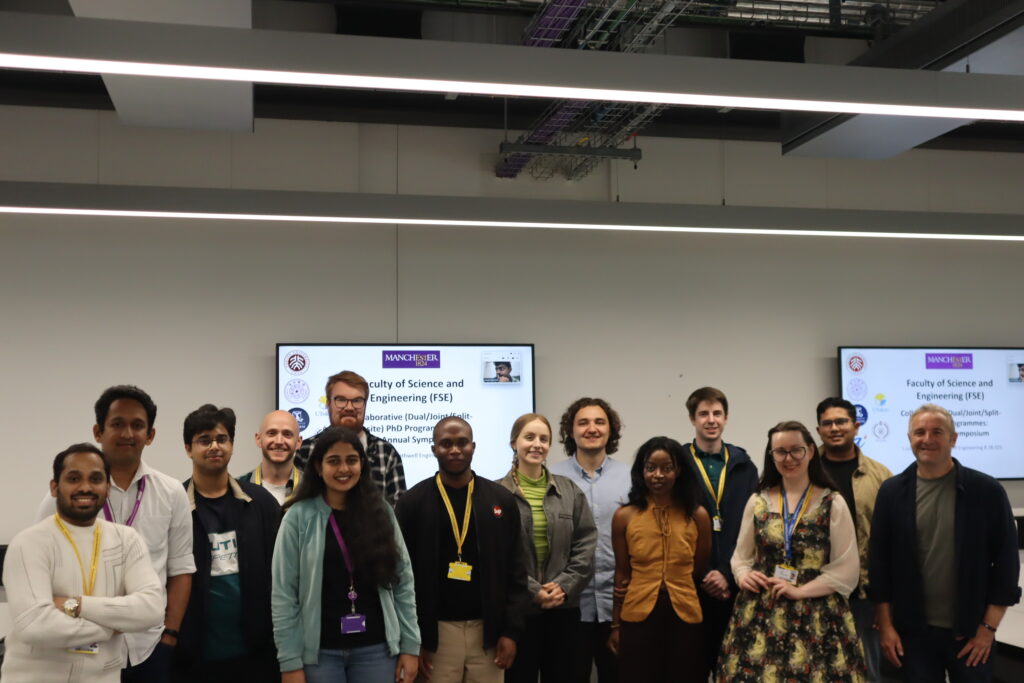
For PhD researchers looking to combine their projects with an invaluable international experience, dual- and joint-awards offer the unique opportunity to shape research across two institutions, two countries, multiple facilities, various supervisors and research communities.
At The University of Manchester, our international partnerships allow for dual- and joint-award PhD programmes with IISc Bangalore, Tokyo University, Tsinghua University, Peking University, IIT Kharagpur and The University of Melbourne,as well as our A*STAR PhD Programme, a four-year PhD consisting of two years at The University of Manchester and two years at Singapore’s A*STAR Research Institute.
We spoke to four of our current dual- and joint-award researchers, Chloe, Rock, Sonu and Akshay. They shared their experience of research across two international universities, their chosen research areas and why they would recommend these uniquely rewarding PhD programmes.
Chloe Lipinski, University of Tokyo – harnessing bacteria to produce anti-tumour drugs
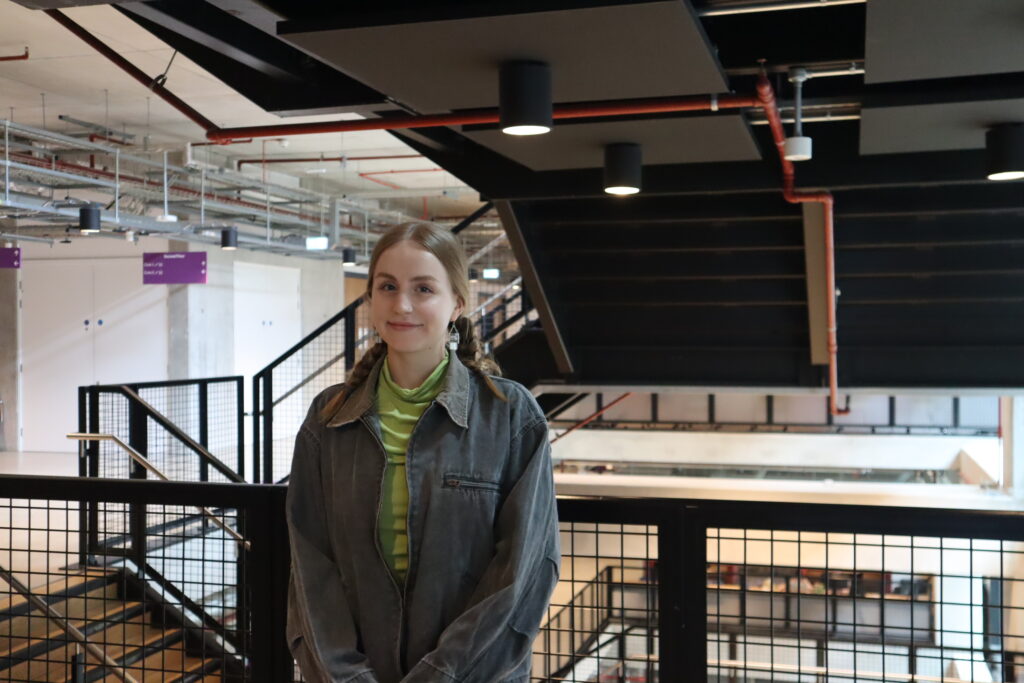
Chloe originally studied in the US, completing her bachelor’s degree in Minnesota before moving to Tokyo for her master’s degree. Her professor from the University of Tokyo recommended a dual-award PhD with The University of Manchester, and for Chloe, the timing was perfect: “The dual degree was a way to spice things up and also give me a way to learn something new, because it wouldn’t just be Chemistry, it was going to be Synthetic Biology as well.”
Chloe’s research focuses on producing anti-tumour drugs using bacteria, combining synthetic biology with chemistry-based methods. By manipulating bacterial DNA, Chloe is exploring ways to produce useful compounds more sustainably, with reduced waste and using fewer harmful solvents, while also looking at ways to diversify and produce these drugs at scale.
The ability to conduct research across two universities has given her access to equipment, labs and support at two institutions – doubling the resources available to get the most out of her research. This is particularly true at The University of Manchester, where Chloe has been able to conduct multiple experiments and produce more samples at the same time due to the available resources.
“In the Manchester Institute of Biotechnology (MIB), you’ll request facilities to train you on the equipment, and then you have their support,” Chloe explains. “There’s not just one piece of equipment I can use; there are so many to choose from, and they each have their own benefits.”
Adjusting to a new country came with its own challenges, particularly leaving friends behind and starting again. But having grown up in the US, Chloe found the move to Manchester more familiar than her earlier move to Japan.
“How you socialise is very similar in the UK and the US,” Chloe says. “There are definitely differences, but compared to Japan, it’s not so different, so it was kind of nice to get back into that kind of setting.”
Finding the right flat share helped too. Chloe found a flatmate with years of experience living in Manchester through SpareRoom, who introduced her to friends outside her research. She also drew on the same approach she’d used to build a community in Tokyo, joining meet-up groups and sports clubs to put herself out there in a new city.
Chloe’s advice for anyone considering a similar move is honest: a dual-award PhD suits researchers who are ready to embrace a new culture, not just a new lab.
“If you’re not willing to put yourself out there, to face adversity, and to accept all aspects of whatever culture you’re entering, I would not recommend this programme. But if you’re open to that, if you’re willing to face those challenges and excited by them, then I would definitely recommend it.”
“Going to a different institution in a different country can really impact your worldview…Take advantage of a lot of different opportunities that you wouldn’t get if you were just in one place.”
Chloe Lipinksi – postgraduate researcher,
The University of Manchester and University of Tokyo Dual-award PhD
Rock Agon, Tsinghua University – developing systems for a renewable future

Rock’s journey to a dual-award PhD began with advice from his master’s supervisor in Rwanda, a University of Manchester alumnus, who encouraged him to apply. Having also learnt about Tsinghua University at a conference, Rock was excited when the opportunity arose to undertake a dual-award PhD across both institutions.
Rock’s PhD research focuses on improving how electrical networks and power systems are planned, so that countries can use more renewable energy without increasing the risk of blackouts. It’s a practical challenge with real-world implications, connecting engineering, infrastructure and sustainability. “We are trying to develop technology that supports the use of more renewable energy, without putting the electrical network at risk”
He is completing his first two years at The University of Manchester before continuing his research at Tsinghua University next year. He explains that moving to Manchester was an adjustment at first, having moved from Africa where he experienced a very different culture and way of life than the UK. Despite this, Rock quickly settled in and is enjoying being part of the research community here.
“It’s really, really great in terms of the research – what I’m learning and what I’m doing. You learn from your colleagues, you collaborate together and you solve the problem together.”
Rock Agon – postgraduate researcher,
The University of Manchester and Tsinghua University Dual-award PhD
One of the biggest strengths of the dual-award, he says, is the supervisory network. He has four supervisors across the two universities and meets regularly with all of them and benefits from their perspectives, with input from all four of them into his research.
As a future alumnus from two universities, Rock hopes having two degrees from two universities will help him in his career: “In academia, the more you collaborate with universities, the higher your chances are when applying for a job.” He continues, saying that doing the dual-award is “a no-brainer,” and “just better,” – thanks to its multitude of opportunities and expanded network of academics to pull from.
Sonu Sudhikumar, IISc Bangalore – supporting sustainable energy storage through AI
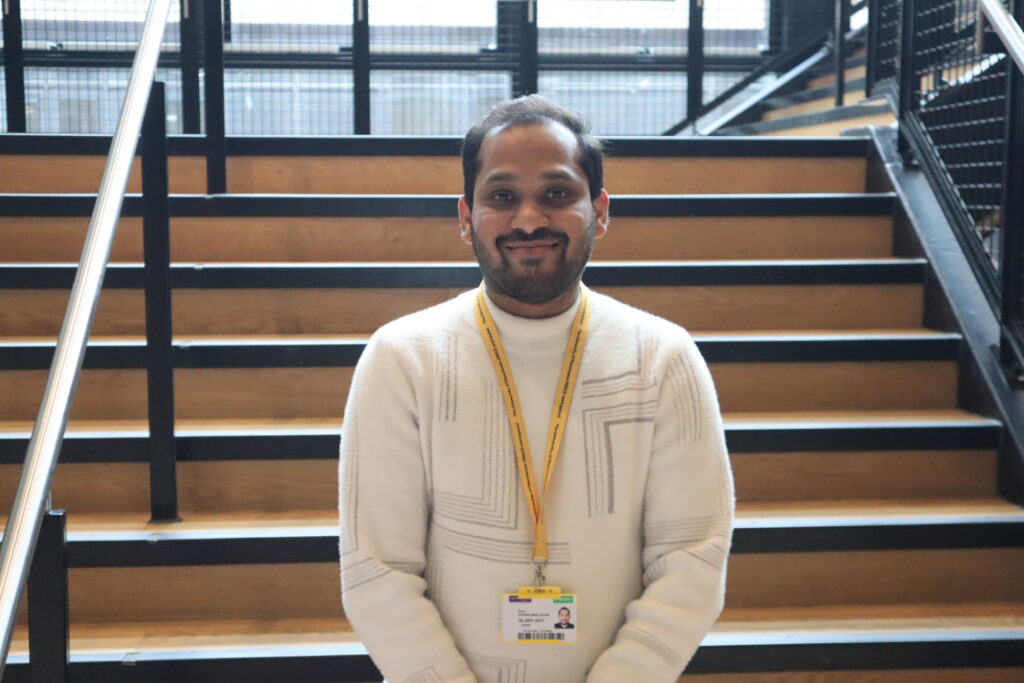
For Sonu, the main appeal of a joint-award was the opportunity to work across two renowned universities while also pursuing his dream to complete a PhD. His PhD programme connects The University of Manchester with the Indian Institute of Science Bangalore (IISc Bangalore), bringing together expertise in chemical engineering, data science and imaging.
Being from India originally and having lived in the UK during his undergraduate and master’s degrees at other UK universities, for Sonu, the opportunity of the joint-award meant more research facilities, more collaborative research and even more experience.
Sonu works in the Subsurface Energy Storage Research Group at The University of Manchester. His research explores how artificial intelligence can enhance low-resolution images of subsurface materials, helping researchers better understand structures linked to carbon capture and storage, hydrogen storage and other energy storage applications. “What we are trying to do is use the low-resolution image, apply artificial intelligence and enhance it so that it will recover the microstructure detail normally produced in a real scan image.”
The joint-award has given Sonu access to facilities and expertise he once saw as out of reach, including opportunities to work with advanced imaging techniques and specialist research teams. It has also shown him the value of collaboration, with colleagues supporting experiments and sharing methods that can be applied across different projects.
“I’m really proud working with these people – It’s been amazing. [My colleagues] are role models, because I never thought I’d be working with such great people. Everybody is there for you. It’s not like we are just on our own.”
Sonu Sudhikumar – postgraduate researcher,
The University of Manchester and IISc Bangalore Joint-award PhD
For Sonu, the programme has offered not only research progression, but a wider community of supervisors, advisers and peers – including invaluable support he received during major life events and difficult periods.
After spending his second year in India, Sonu came back to the UK early to conduct more experiments in the labs at The University of Manchester. He will be heading back to IISc Bangalore in September for his third year, completing his PhD one year early while remaining on track to publish work in five publications by the end of his PhD, thanks to his work with supervisors across both institutions.
Akshay Kashyap, The University of Melbourne – developing solutions to water contamination
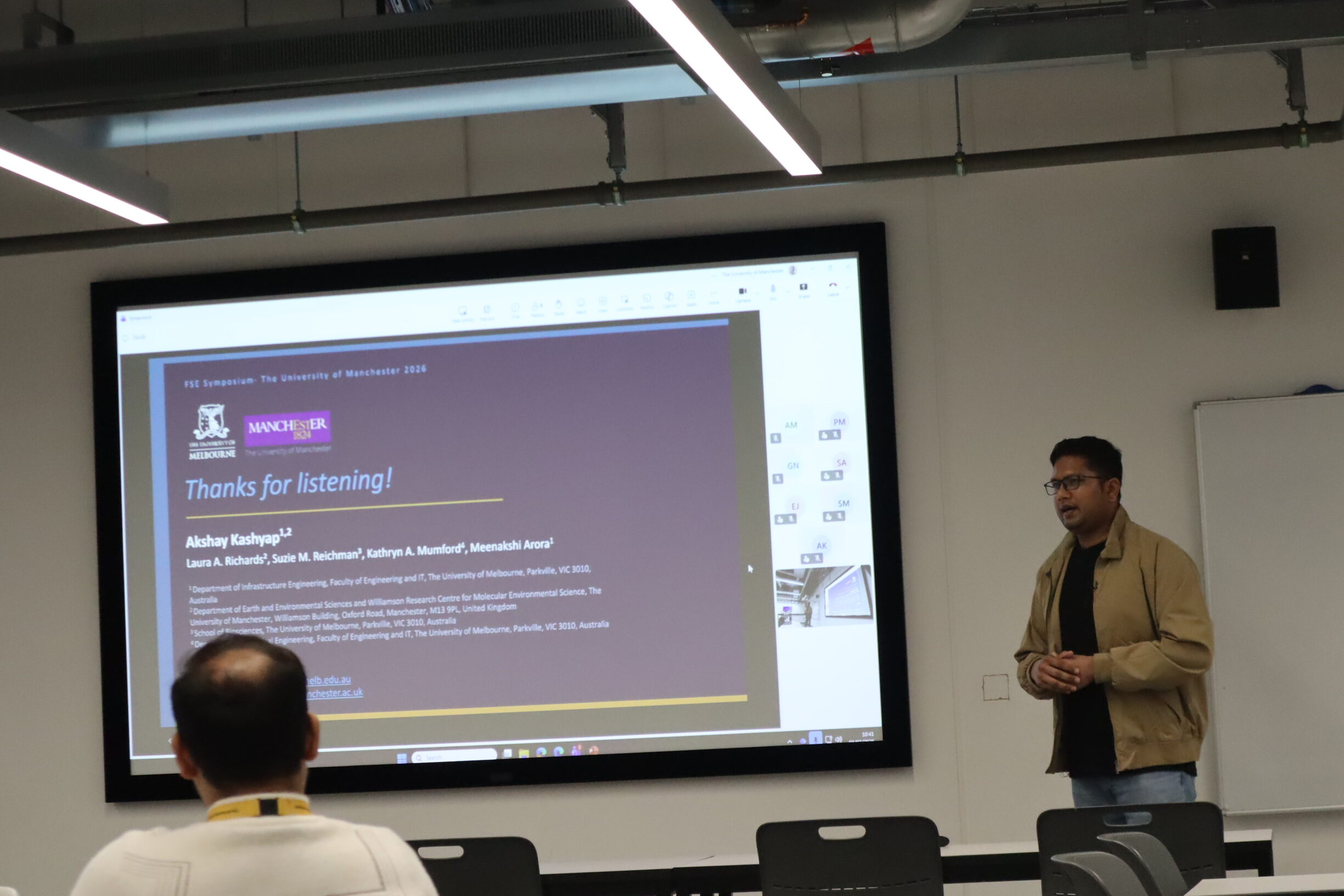
Before embarking on a dual-award PhD, Akshay was working in the field of arsenic and fluoride research, having studied this for his master’s degree in India. Impassioned by his master’s degree, Akshay came across a dual PhD opportunity that linked to this area of interest – a partnership between The University of Melbourne and The University of Manchester.
The PhD project connected directly to issues he had seen in his local area in India, where water contamination has serious impacts on communities.
The first stop on his dual-award journey was Melbourne, where he developed technical expertise and built a network of colleagues and friends, before moving to Manchester to complete his research. At The University of Manchester, Akshay unlocked complementary perspectives through fieldwork-focused supervision.
“Whenever I write a paper, I get two different perspectives on the same topic”, Akshay explains having multiple supervisors across both institutions has helped with his research as he benefits from input from all these renowned academics.
Akshay describes the dual-award as challenging but highly rewarding. Moving between universities, navigating different systems and adapting to new places requires resilience. However, he believes the experience has helped him build leadership, communication and networking skills that will support his future career:
“Being in two different places will give me international outlook to improve my CV… If you overcome the challenges, if you overcome your comfort zones, you will be rewarded highly.”
Akshay Kashyap – postgraduate researcher,
The University of Manchester and The University of Melbourne Dual-award PhD
One highlight has been the development of his presentation skills. After initially struggling with public speaking, Akshay took part in the Three-Minute Thesis competition at Melbourne and progressed through several rounds. Now coming to the end of his PhD, Akshay has come a long way in both his research and confidence in public speaking – having recently been selected for a graduate research showcase with industry and government professionals.
Explore dual- and joint-awards at Manchester
Interested in expanding your PhD research experience? Learn more about our dual- and joint-award partnerships, including available projects and application information.
Dual- and joint-award FAQs
How do dual- and joint-awards work?
Researchers can split their time across one of these institutions and Manchester to complete their research and receive either two awards, or a combined PhD award, from two global universities.
What’s the benefit of a dual- or joint-award PhD?
Dual- and joint-awards allow researchers to step outside the familiar and make the most of multiple research facilities, as well as draw on the knowledge of multiple PhD supervisors, an expanded research network and benefit from multiple perspectives on their research topic.
Which universities does The University of Manchester partner with for the dual- and joint-awards?
The University of Manchester is partnered with many leading international universities in science and engineering, including:
- ISSc Bangalore, India
- Tokyo University, Japan
- Tsinghua University, China
- Peking University, China
- IIT Kharagpur, India
- The University of Melbourne, Australia.
- A*STAR Research Institute, Singapore.
Last reviewed: