
·
·
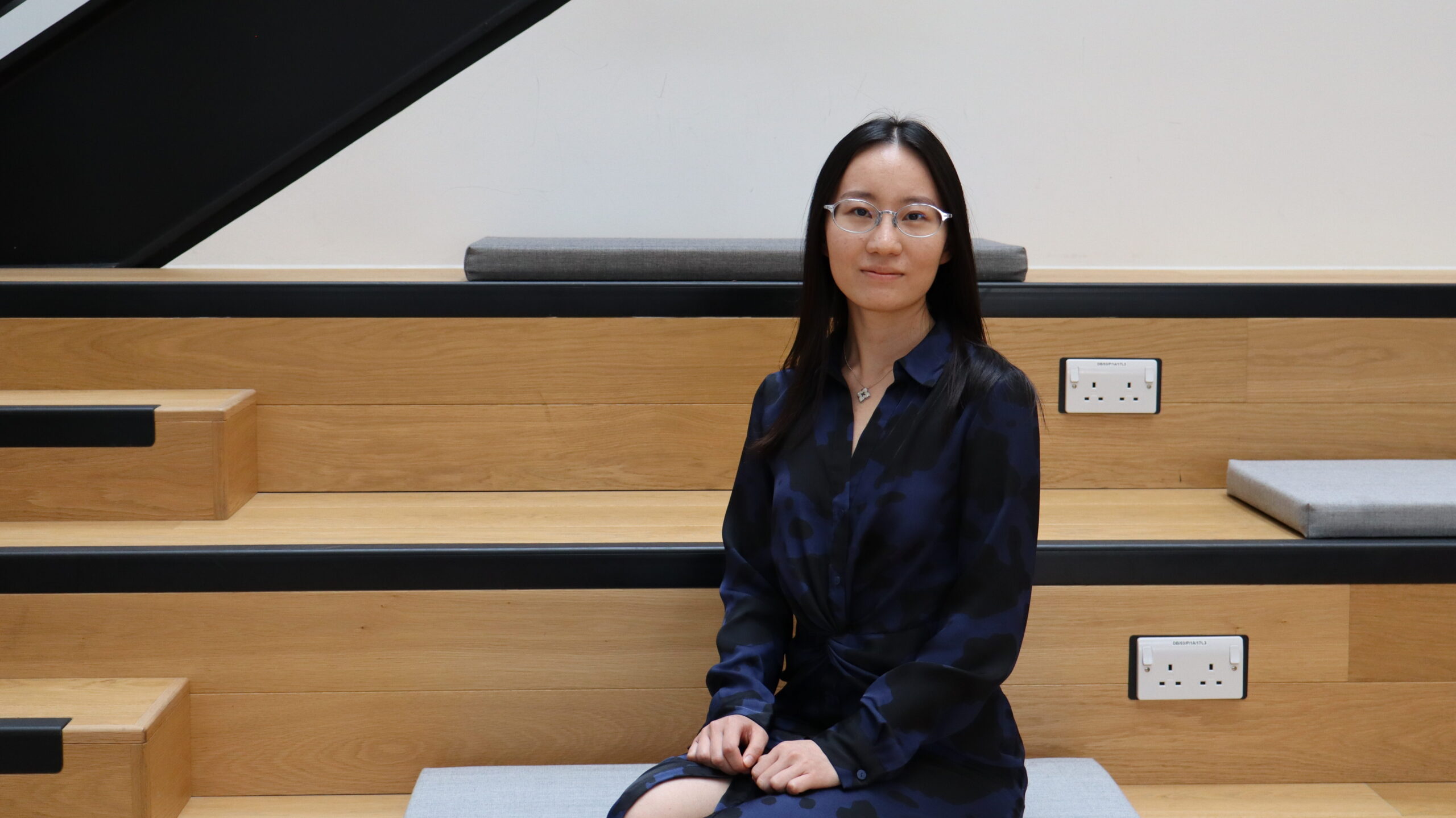
Jinwei Zhang, a postgraduate researcher for the Robotics and AI for Net Zero (RAINZ) Centre for Doctoral Training at The University of Manchester, shares her journey so far – and what’s in store for her PhD.
Jinwei’s path to the RAINZ PhD programme
Jinwei’s academic achievements so far include a BEng in Electronics and Electrical Engineering (dual award) from the University of Glasgow and UESTC China and a Master of Science by Research from the University of Edinburgh in Computer Science. This last year, she has also completed two semesters of taught modules from the MSc Robotics programme at The University of Manchester, during the first year of the RAINZ Centre for Doctoral Training (CDT) programme.
Jinwei is now about to take her next steps in the RAINZ CDT, beginning the research component of her PhD in Robotics and Artificial Intelligence at The University of Manchester.
Researching Theory of Mind in human-robot interaction
Jinwei’s research will focus on Theory of Mind in robotics, investigating how robots can understand human intentions through embodied cognitive and affective computing, with the goal of enabling more natural and interpretable human–robot interaction.
“Theory of Mind, in Psychology terms, means humans’ abilities to attribute mental states, such as beliefs, intentions and emotions to other people, it’s basically how we understand each other.
“By observing you, I can understand how you’re feeling today, your beliefs, what your intentions are and so on. We want to apply that to robotics, so that in human-robot interaction, designed robots can provide better performance and a better experience when they interact with humans.”
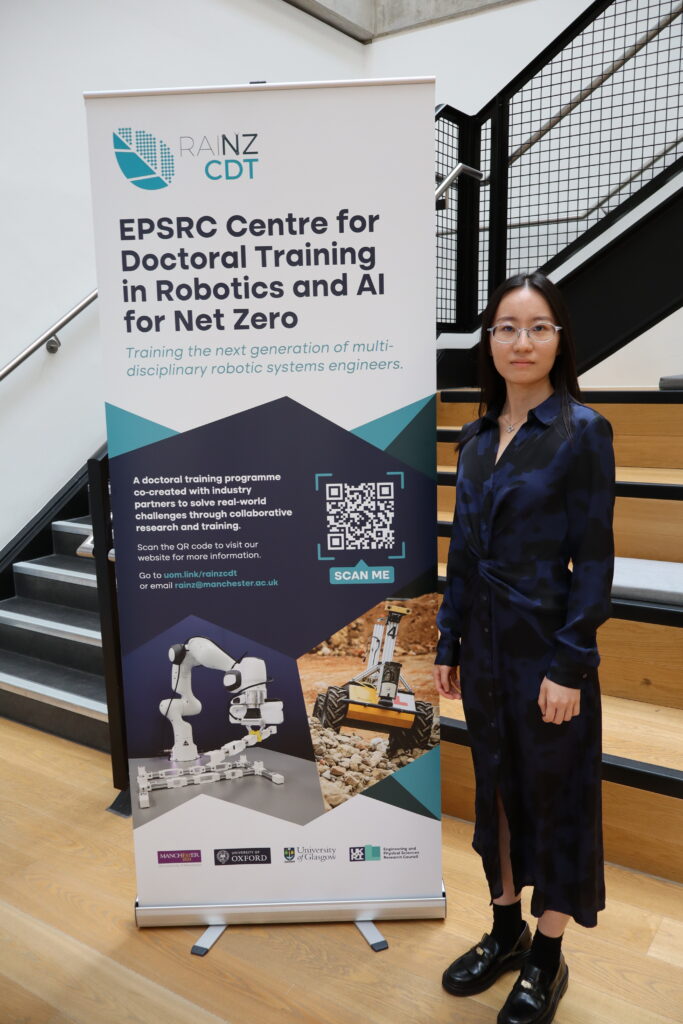
Few people in the UK work in this area, which is what motivated Jinwei to apply for the RAINZ CDT programme, as her supervisor is one of the few experts in Theory of Mind.
Combining engineering, computer science and psychology in PhD research
Jinwei’s research project is multidisciplinary, and her varied background has helped her develop skills across multiple fields which will now help with her research.
As part of a cohort of researchers, she says it’s interesting to collaborate with people from other fields, and that she values sharing ideas and supporting each other with different aspects of robotics.
“It’s interesting to hear people’s opinions from different aspects, according to their own technical backgrounds,” Jinwei says, explaining that this has been particularly useful during the research sprint they recently completed as a group, allowing the RAINZ cohort to benefit from their range of experience and specialisms to complete research projects together.
“I have a multidisciplinary background. I come from an electronic and electrical engineering background and then I moved to computer science, then my research is related to psychology.”
Jinwei Zhang, RAINZ CDT postgraduate researcher
Advice for aspiring robotics PhD researchers
“I think the first thing is to know yourself whether you like doing research before you apply”, Jinwei recommends to anyone thinking about doing a PhD, as well as recommending those curious to do a research internship or a research project first to discover if postgraduate research is something they would enjoy.
She also highlights that a PhD isn’t for everyone, depending on personal preferences and interests: “I think people have different expectations of a PhD, and some people are more suited to it. Some people may want to do something more like engineering and not the research on methodologies and theories.”
For Jinwei, however, researching theory is what she loves. After completing her Master of Science by Research degree, she knew this was the path for her.
Building a community within the RAINZ CDT cohort
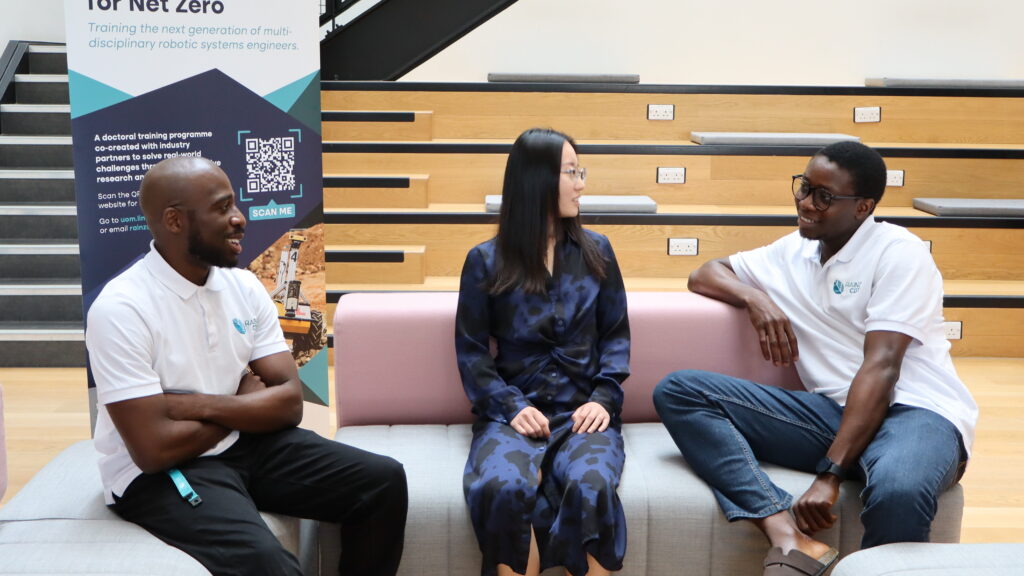
“I know that I’m not alone,” Jinwei says when reflecting on how the CDT has given her a sense of community. She explains that a PhD can be daunting, so starting with a cohort of researchers and starting their training at the same time creates a sense that everyone is in it together.
Cohort-based learning means RAINZ researchers can all support each other, with Jinwei expressing that she has had a lot of mental support from her fellow researchers during the first year. The first year has mainly involved literature reviews and training, with a bit of research, which has been a great way for Jinwei to ease into the PhD and given her the confidence to start her research project.
What’s next for Theory of Mind research in robotics
Jinwei is passionate about her research and says in the future her dream is just “to continue my research, this is my favourite field”, whether that will be in academia or industry, only time will tell.
She explains as it’s still quite a new field of research there are not many opportunities yet in industry; “people and companies are just starting to do this.” Being at the forefront of research in this area is exciting and rewarding and will be interesting to see the developments in this area over the next few years and decades.
Learn more about PhD opportunities in robotics and AI
If you are interested in robotics, AI, sustainability or research that supports net zero, explore PhD opportunities through the RAINZ CDT and discover how you could help shape the future of sustainable robotics.
Last reviewed: